

Incorporating a wedding ritual into your ceremony is a fantastic way of adding meaning and making the ceremony personal to you as a couple. A symbolic ritual of commitment is usually held before the ring exchange.
More information on each type of ceremony can be seen by clicking on the links below.
Some of the materials involved in the Wedding Ceremony Rituals listed below may incur an extra cost.






This is by no means a complete list. If you would like to incorporate a ritual personal to you or your country anything is possible!
Copyright Ceremonies in Spain 2026
Wedding Celebrant in Spain - Professional Wedding Services
Web Design: TonyWilkinsonPhotography
Getting married in spain / Wedding Celebrant Costa del Sol / Celebrant Spain / Humanist Minister in Malaga and Marbella / Humanist Wedding Celebrant / Baby Naming Ceremony in Spain / Humanist Wedding Blessing in Spain
Hand Fasting

We have all heard the expressions "tied the knot" or "giving one's hand in marriage". It's in reference to the ancient tradition of handfasting.
The term Handfasting is taken from Old Norse "hand-festa" meaning "to strike a bargain by joining hands". Handfasting is the tradition of lightly binding the hands of a couple together using a cord, rope, ribbons, a scarf, tartan or strips of fabric. It is meant to signify a couples coming together as "One". Whatever it's original intention, it has become a popular new tradition for today's couples seeking new and Spiritual ways to honour their love.


Unity Sand Ritual

A meaningful symbolic joining of two lives. In this timeless ritual of marriage, the couple ceremoniously pours a different colour of sand from separate containers into one special container, the unity vase, symbolising their coming together as one.
The layers represent their two different personalities, still separate but mixing as one.The top is sealed and you can take this home to display in your home. Some couples have the vase engraved. You could bring sand from a beach near where the couple are each from. Or include members of your family. This is especially touching when either, or both of you, have children.

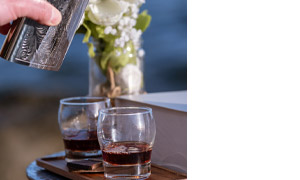
Sea Salt, Dark Chocolate & Port
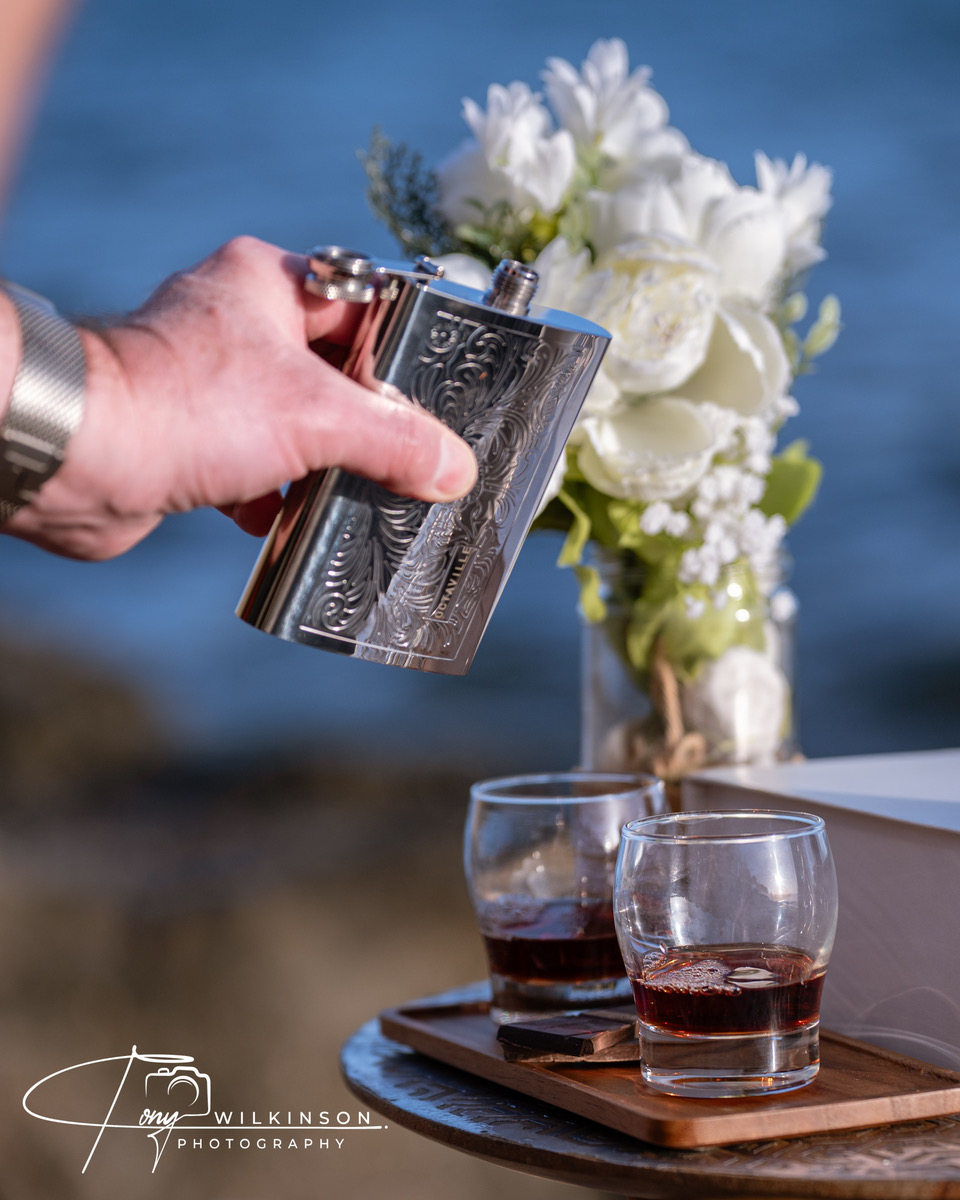
"Throughout history, vessels setting out across unpredictable oceans carried fortified spirits crafted to endure long voyages, rough weather, and passage through time without losing their rich character.
In marriage, as on the sea, you encounter two distinct flavours: the sweet and the salt".
As your celebrant I’ll perform a reading and guide you through the steps as you both share the chocolate, salt and port which represents the sweetness and challenges of married life. A meaningful and tasty ritual!
Unity Candle Ritual

A candle can be lit by a representative from each family ie the Mothers. The two candles are brought together and a third candle lit by the couple. It signifies the giving of each child by their family in support of this loving union.
Or the couple can each light a candle, and then the central one together symbolising their new life together.


Wine Ritual
There are two small glasses of wine, with one bigger empty glass in the middle. The bride and groom take a small glass each and hold them, facing each other. Their individual glasses of wine represent who they each are: their ideals, thoughts, passions, their individual life experiences that make them the person they are today.

They each pour their glasses into the large glass to combine the two wines to symbolise the union of their two lives.
Just as these two wines can never be separated and poured back into their own containers so will your marriage be: a moulding of two individual personalities, bonded together forming one heart.

Canvas Painting

A fun alternative to the traditional Unity Candle Ceremony or Sand Ceremony. The Unity Canvas Painting Ceremony lets the couple celebrate their Wedding or Vow renewal, in an artistic way that truly represents themselves. Depending how artistic the couple is: you can choose to paint an image or you both pick up your pot of paint and pour it over the top of the canvas resulting in an abstract style painting.
I would say a few words about marriage: Every marriage starts out as a blank canvas and every day is a splash of colour. This blank canvas represents the day of the wedding, and a new beginning.
Arras Coins
A very traditional Spanish Ritual where 13 pieces of coins (silver or gold) called arras are placed into the Groom's waiting hands, who in turn drops it into the Bride's hands. The Bride then puts her hand above the Groom's then drops the arras into his hands again. The Groom allows the coins to then be dropped into a plate held by a family member or myself.

The metal tinkling of the coins being passed from one pair of hands to the other, is a distinctive reminder of the groom's promise to take care of his wife materially. The bride in return, by giving back the coins to his hands, conveys that what they both earn becomes part of each other's. The trickling sound also signifies abundance and success in the couple's joint efforts.

Rose Ceremony

Simple yet profoundly moving. The couple exchange two roses, symbolising the giving and receiving of their love for each other throughout their entire married life.

The Rose Ceremony also conveys how to use the rose and its symbolism in difficult times in order to forgive each other. In the past, the rose was considered a symbol of love and a single rose always meant only one thing – it meant the words “I love you.” So it is appropriate that for your first gift – as lifelong partners – that gift would be a single rose.
Other family members can be included in this too! eg Roses gifted to mothers of the couple.

Passing the Rings

The couples rings are tied together with ribbon (or any cord) and passed amongst all your friends and family.
They are passed full circle back to the couple loaded with the good wishes and love of your friends and family. Simple, but touching.


Traditional Scottish Quaich

The Quaich is a traditional Scottish two handled drinking cup. The word Quaich comes from the Gaelic word ´cuach´or cup. They can be made of wood, pottery, silver or pewter and come in a range of sizes.
The Quaich is often referred to as ‘the loving cup’ or cup of welcome, or friendship and its´ two handles make it ideal for sharing.
It is unique to Scotland and part of the tradition of Celtic hospitality was that of welcoming guests with a drink from a Quaich. Sharing a cup was also seen as a sign of trust between the people drinking from it – because it is offered and taken with both hands, the drinker could not hold a weapon at the same time and the sharing of the drink was also a guarantee that it hadn’t been poisoned!
During your ceremony you will drink whiskey from the cup (a great way to calm your nerves too!!). I will then read a traditional Scottish poem.
The Wish Tree

My inspiration came from a wonderful Dutch custom of substituting the guest book with a wedding "wish tree."
Guests write their special wish for the happy couple on their leaves, which the happy couple can then read and hang on the tree. I’ve incorporated this into the Ceremony.
You can choose family members or a selection of guests to write a word each and to walk up, say the word, and hang it on the tree (that I supply). For example: Love, fun, patience, tolerance, understanding, joy, memories.
Any word you or they choose. Or a sentence / wish for the happy couple. You can keep all the ‘leaves’ in your wedding box after the big day. If the couple are from another country or countries you can have some of the words written in different languages.
Hindu Rituals

These two rituals are based on a Traditional Indian Hindu Wedding Ritual. It may appeal to the more spiritual couples. You can include both, or you may choose to just include one. Totally up to you!
Jai Mala Ritual: During Hindu wedding ceremonies the bride and groom exchange a garland of flowers, which signifies the acceptance of each other and that they enter their marriage freely.
Saptapadi Ritual: This is seven sacred steps, that they will take together as a couple, whist making a promise during each step. The seven promises are: “Together we will live with respect for one another. Together we will develop mental, physical and spiritual balance. Together we will prosper, acquire wealth and share our accomplishments. Together we will acquire happiness, harmony and knowledge through mutual love. Together we will raise strong, virtuous children. Together we will be faithful to one another and exercise self-restraint and longevity. Together we will remain lifelong partners and achieve salvation.”
Wine Time Capsule

For couples who love wine and want to create a meaningful ceremony that celebrates both. You can add other special memories from your day such as your vows.
Wine has been part of wedding celebrations for thousands of years, from ancient Roman toasts to the sacred wine shared in Jewish ceremonies. Today’s wine-loving couples are creating something new with the Wedding Wine Box Ceremony—a modern unity ritual that turns your favourite wines into a special time capsule to open on a future anniversary.
This beautiful ceremony is perfect for wine enthusiasts who know that good wine, like a good marriage, gets better with time. It’s ideal for couples who enjoy discovering new wines together, have a favourite bottle with a special story, or simply want to add something unique and personal to their wedding day.
The Wine Box Ceremony is a contemporary unity ritual where couples select special wines to be sealed in a beautiful box during their wedding, creating a liquid time capsule to be opened on a future anniversary. Unlike traditional wine ceremonies, where you drink the wine immediately, this ritual is all about looking forward to future celebrations together.
This meaningful moment, blessing both the wine and your future together whilst incorporating personal touches that reflect your relationship. The ceremony creates a lovely connection between your wedding day and your future celebrations, just like how a good wine connects you to the memories of when and where you first enjoyed it.
Wine Selection Presentation: Each partner presents their chosen bottle, explaining its significance—perhaps a vintage from the year you met, a wine from your honeymoon destination, or a rare bottle you’ve been saving for a special occasion.
Love Letter Sealing: Together, you place handwritten letters to your future selves alongside the wine. These might include predictions for your life together, promises for your marriage, or simply explanations of why you chose these particular wines.
There is the symbolism of wine in marriage—its ability to age gracefully, develop complexity, and bring joy through patience and care. They may reference wine’s role in wedding traditions throughout history, from Roman times to modern celebrations.
Box Sealing: Together, you close the box, often using a special lock or seal, whilst words are said about the anticipation of your future celebration and the memories you’ll have created by then.
Future Promise: You make a commitment about when you’ll open the box—your 5th anniversary, 10th anniversary, the birth of your first child, or another meaningful milestone.
Cultural Integration: you can incorporate wine traditions from your heritage—French blessing rituals, Italian toasts, or Spanish ceremonial elements—whilst keeping the focus on your modern love story.
Irish Traditional Silver Wedding Coin

History:
It is believed that the Irish tradition of the wedding coin has its roots in the Brehon law, when the groom would gift his new bride with a coin to represent that from this point forward, everything he owns would be equally shared.
Symbolism & Meaning
There may be variants of this tradition depending on which family and region of Ireland, and availability of coins. Some believe that once the wedding coin is gifted to the bride, it should be put into the bride’s shoe to ensure prosperity in the marriage.
The wedding coin can also be handed down from parents to eldest child, or first son, or so forth. The great thing about wedding traditions is that you are free to make your own variation of the tradition in order to make it meaningful to you.
Polish Wedding Tradition
Bread, Salt & Vodka
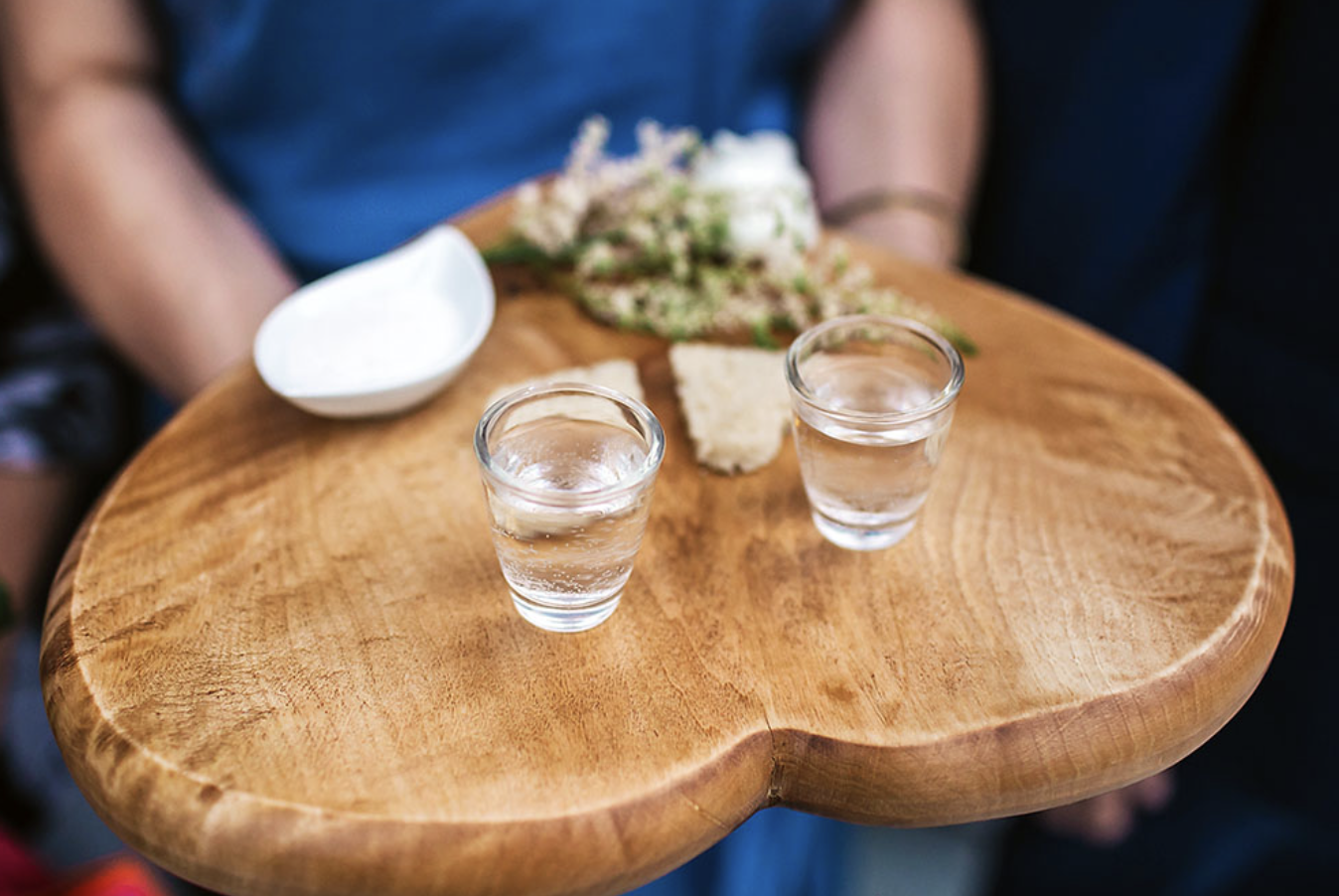
The bread and salt (chleb i sól) welcome is a classic Polish wedding tradition where the parents greet the newly married couple as they arrive at the reception venue.
How the Ritual Works
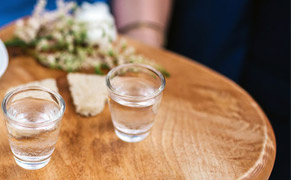
• The Presentation: The parents stand at the entrance holding a specially prepared round loaf of bread placed on an embroidered cloth or tray, alongside a small dish of salt.
• The Eating: The bride and groom each tear off a piece of the bread, dip it into the salt, and eat it.
• The Toast: This is usually followed by a toast where the parents hand the couple two glasses - traditionally one with vodka and one with water. Each drinks without knowing which is which; folklore says whoever gets the vodka will be the dominant partner in the marriage.
• The Blessing: The parents give the couple a warm embrace and a blessing before everyone heads inside to start the party.
What Each Symbol Means
• Bread: Represents a wish that the couple will never know hunger, lack, or financial hardship, and will always have plenty to share.
• Salt: Acknowledges that life will bring challenges, arguments, and difficult times, reminding the couple of the grit and resilience needed to stay strong together.
• Vodka / Water: A symbol of joy, good health, celebration, and never going thirsty in life
See it being celebrated here: https://www.instagram.com/reel/CzvjKg9B7PC/
